
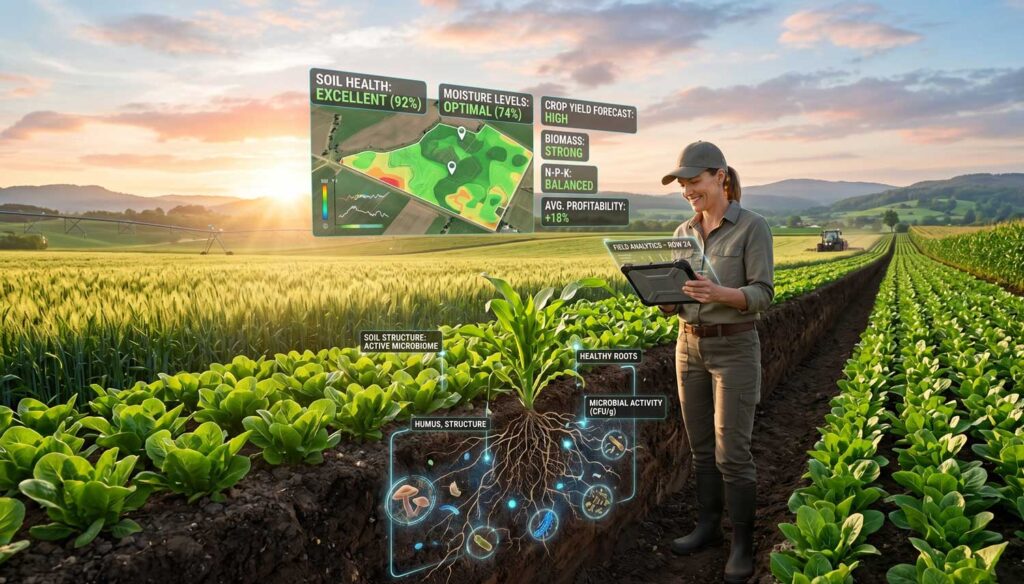
Modern farming faces increasing challenges. Unpredictable weather patterns, rising input costs, and the need to maintain productivity have made it essential for growers to adopt smarter and more sustainable farming practices.
One of the most effective ways to build resilience and improve long-term profitability is by focusing on soil health.
Why Soil Health Matters
Healthy soil is much more than a growing medium. It is a living ecosystem that supports plant growth, nutrient cycling, water retention, and microbial activity. When soil health is optimized, crops become more resilient to environmental stress, leading to stronger yields and improved profitability.
A healthy soil profile helps:
- Improve nutrient availability
- Increase water-holding capacity
- Support beneficial microbial activity
- Reduce fertiliser waste
- Enhance crop resilience during drought and extreme weather
These benefits contribute directly to improved farm performance and long-term sustainability.
The Growing Importance of Data-Driven Farming
Today’s successful growers are increasingly using testing and monitoring tools to make informed decisions. Soil testing, nutrient analysis, moisture monitoring, and pH management allow farmers to identify issues before they impact crop performance.
By understanding what is happening beneath the surface, growers can:
- Apply nutrients more efficiently
- Reduce unnecessary input costs
- Improve crop consistency
- Increase return on investment
Precision agriculture begins with accurate information and targeted action.
Building Resilience Against Climate Challenges
Extreme weather events continue to challenge agricultural production worldwide. Drought, excessive rainfall, and temperature fluctuations can all impact crop health and profitability.
Strategies such as improving organic matter, enhancing soil biology, and adopting moisture management technologies can help farms better withstand environmental pressures.
When soil structure improves, water infiltration increases, nutrient retention becomes more effective, and plants are better equipped to manage stress.
The Role of Biological and Sustainable Solutions
Many growers are incorporating biological products and regenerative practices into their farming systems. These approaches focus on supporting existing soil life, encouraging beneficial fungi, and creating healthier growing environments for crops.
The result is often improved nutrient cycling, stronger root development, and enhanced plant performance throughout the growing season.
A Long-Term Investment in Farm Profitability
Sustainable farming is not simply about environmental responsibility. It is about creating a farming system that remains productive, profitable, and resilient for years to come.
By investing in soil health, data-driven decision-making, and climate resilience strategies, growers can position themselves for stronger yields, reduced risk, and greater long-term success.
Conclusion
The future of agriculture belongs to growers who understand that healthy soils create healthy crops. By combining modern diagnostics, precision management, and sustainable farming practices, farms can improve productivity while building resilience against future challenges.
Focusing on soil health today lays the foundation for a more profitable and sustainable tomorrow.